Castle Guide
11 Best Castles in Bavaria You Can Actually Visit Inside
Bavaria has more castles than any other German state. These 11 are the ones worth going inside — each with something you won't find anywhere else.
4.9/5 on TripAdvisor
Money-Back Guarantee
Since 2004
No Hidden Extras
Everyone visits Neuschwanstein. The real gems are the castles you’ve never heard of.
Bavaria has more castles than any other German state — over 300 by most counts, from crumbling hilltop ruins to fully furnished royal palaces. But not all of them let you inside. Many are private property, sealed-off ruins, or visible only from the outside. The 11 castles on this list are ones you can actually walk through, and each one offers something genuinely different.
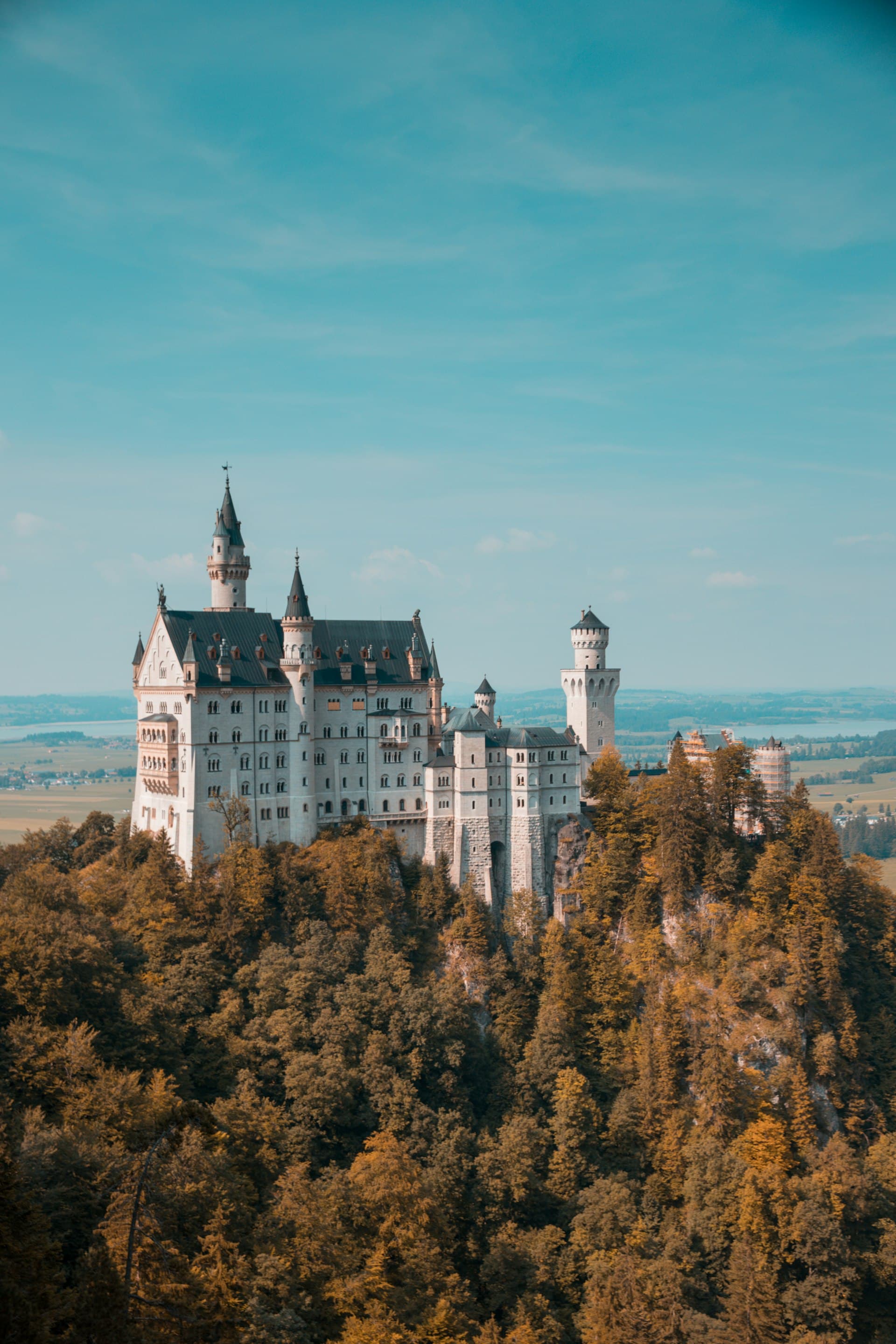
1. Neuschwanstein Castle
The castle that launched a thousand postcards. King Ludwig II commissioned Neuschwanstein in 1869 as a Romanesque fantasy retreat, inspired by the operas of Richard Wagner. Of the 200 planned rooms, only 14 were completed before Ludwig's death in 1886. The Singer's Hall, modeled on the Wartburg's legendary festival hall, spans the entire fourth floor but never hosted a single concert during Ludwig's lifetime.
Why it's special: The sheer ambition. Ludwig hired a theater set designer rather than an architect to draft the original plans, and you can see that theatrical sensibility in every room.
Tip: Tickets sell out weeks ahead in summer — secure admission before you travel. A private tour handles this entirely; you walk past the queue and into the castle.
2. Linderhof Palace
The smallest of Ludwig II's three palaces, and the only one he lived to see completed (1870-1879). Linderhof is tucked into a secluded Alpine valley near Ettal and modeled after the Petit Trianon at Versailles. The interiors are outrageously ornate — the Hall of Mirrors makes the relatively small rooms feel infinite. But the real highlight is the park: a Venus Grotto with an artificial lake and shell-shaped boat, a Moorish Kiosk bought from a World's Fair, and formal gardens with cascading fountains.
Why it's special: It's the most personal of Ludwig's castles — you get a real sense of how the man actually lived, not just what he aspired to build.
Tip: The fountains in the garden run every 30 minutes from April through October. Time your garden walk to catch one.
3. Herrenchiemsee New Palace
Ludwig II's most ambitious (and most expensive) project: a full-scale replica of Versailles, built on an island in Lake Chiemsee. Construction started in 1878 and was abandoned after Ludwig's death in 1886 — only the central section was completed. The Hall of Mirrors here is actually longer than the one at Versailles (98 meters vs. 73 meters), with 52 candelabras holding 7,000 candles. The unfinished wings are left as bare brick, giving you a striking sense of the project's interrupted scale.
Why it's special: Getting there is half the experience. You take a ferry across the lake, then a horse carriage or walk through old-growth forest to reach the palace. On the island, you'll also find the Augustiner Monastery with a fresco-covered church.
Tip: Our Chiemsee and Herrenchiemsee day tour handles the ferry timing and transport. The Fraueninsel, a smaller island nearby, has a Benedictine convent founded in 772 AD and is worth combining.
4. Hohenschwangau Castle
The yellow castle across the valley from Neuschwanstein, and far more historically significant than most visitors realize. This is where Ludwig II spent his childhood. His father, King Maximilian II, rebuilt the medieval ruin in a Gothic Revival style in the 1830s, and the young Ludwig grew up surrounded by wall paintings of Teutonic legends and Wagner's operas. The room where Ludwig first met Wagner — the Hohenstaufen Room — is preserved exactly as it was.
Why it's special: Hohenschwangau explains Neuschwanstein. Every obsession Ludwig poured into his famous castle was seeded in the rooms of this one.
Tip: Get the combination ticket with Neuschwanstein. Visit Hohenschwangau first (it's closer to the village), then walk up to Neuschwanstein.
5. Nymphenburg Palace
The Wittelsbach dynasty's summer residence, located in western Munich. The main palace was started in 1664 and expanded over the following century into a 632-meter-wide Baroque complex — wider than Versailles. Inside, the Gallery of Beauties features 36 portraits commissioned by King Ludwig I (grandfather of Ludwig II) of the most beautiful women of his era, including the notorious Lola Montez. The Marstallmuseum in the south wing houses the royal carriage collection, including Ludwig II's ornate golden sleigh.
Why it's special: The 200-hectare park behind the palace is one of Europe's finest English landscape gardens, free to enter, and connects four smaller garden pavilions: the Amalienburg hunting lodge is a jewel of Rococo architecture.
Tip: Start with the main palace, then walk to the Amalienburg — most visitors miss it, and it's arguably the most beautiful single room in Munich.
6. Schleissheim Palace
Ten kilometers north of Munich, this complex of three palaces (Old, New, and Lustheim) is one of Bavaria's best-kept secrets. The New Palace (1701-1726) rivals Nymphenburg in scale but sees a fraction of the visitors. The Great Gallery on the first floor is a 57-meter-long Baroque hall used by the Bavarian State Painting Collection to display Old Masters. Lustheim Palace at the far end of the formal gardens houses one of Europe's finest Meissen porcelain collections.
Why it's special: You'll practically have it to yourself. Even on a busy Munich summer day, Schleissheim is quiet. The Baroque garden between the three palaces is a peaceful, geometrically perfect place to walk.
Tip: Combine with a visit to nearby Dachau (the town has a historic old center, separate from the memorial) for a full day out of Munich.
7. The Munich Residenz
The Residenz is not a single building but a city within a city — the official seat of the Wittelsbach rulers for over 600 years, expanded continuously from the 14th century to the 19th. The museum route covers 130 rooms, making it one of the largest palace museums in Europe. The Antiquarium (1568-1571), a 66-meter-long Renaissance hall covered in frescoes, is one of the most impressive rooms in Germany. The Treasury holds the Bavarian crown jewels, including the Crown of Henry II from around 1270.
Why it's special: 800 years of continuous expansion means you walk through Gothic, Renaissance, Baroque, Rococo, and Neoclassical rooms in a single visit. No other building in Bavaria shows you that range.
Tip: The Residenz is enormous. If time is limited, prioritize the Antiquarium, the Rich Rooms (Reiche Zimmer), and the Treasury. Our Munich Royal Residences day tour covers the Residenz and Nymphenburg with expert guidance.
8. Hohenzollern Castle
Technically in Baden-Wurttemberg on the edge of the Swabian Alps, but close enough to Bavaria to appear on many Bavarian itineraries. This dramatic hilltop fortress sits on a 855-meter peak shrouded in morning fog, and the Hohenzollern family — who produced the last German Kaiser — still own the property. The castle you see today is a 19th-century Gothic Revival reconstruction, but the site has been fortified since the 11th century. The Prussian Crown is displayed here along with a letter from Frederick the Great and personal effects of the last Kaiser.
Why it's special: The silhouette. Rising from the fog on an isolated peak, Hohenzollern is perhaps the single most dramatically positioned castle in Germany.
Tip: Visit on a morning when low fog fills the valleys — the castle appears to float above the clouds.
9. Burghausen Castle
At 1,051 meters long, Burghausen holds the Guinness World Record as the longest castle complex in the world. Stretching along a narrow ridge above the Salzach River on the Austrian border, the castle consists of six courtyards connected in a chain. It was the secondary residence of the Dukes of Bavaria in the late Middle Ages and served as a fortress guarding the lucrative salt trade route. The main castle houses a fine collection of Gothic panel paintings.
Why it's special: The sheer scale is unlike any other castle. Walking from the first courtyard to the sixth, with the river and Austrian Alps below, takes about 20 minutes and feels like crossing an entire medieval city.
Tip: Walk the full length of the castle along the ridge. The best view of the entire complex is from the bridge on the Austrian side of the Salzach River.
10. Harburg Castle
One of the oldest and best-preserved castles along the Romantic Road, Harburg has stood above the Wornitz River for over 900 years. It was never conquered or significantly damaged by war — a remarkable claim in a region that saw centuries of conflict including the Thirty Years' War. The castle is still privately owned by the Oettingen-Wallerstein family and features an impressive collection of medieval weapons, tapestries, and religious art. The keep dates to the 11th century.
Why it's special: Authenticity. While most Bavarian castles were rebuilt or heavily restored in the 19th century, Harburg's medieval fabric is largely original. It feels genuinely old in a way that Neo-Gothic castles cannot replicate.
Tip: Combine with Rothenburg ob der Tauber (45 minutes north) and Donauworth (20 minutes south) for a full Romantic Road day. Our Romantic Road Highlights day tour includes this route.
11. Schloss Ambras (Innsbruck)
Technically in Austria, but Innsbruck is only 1.5 hours from Munich and features on many of our tours. Archduke Ferdinand II transformed this medieval castle in the 16th century into a Renaissance palace to house his extraordinary Cabinet of Curiosities — one of the oldest museums in the world. The collection includes coral sculptures, suits of armor for giants (a 2.6-meter-tall suit is the largest surviving medieval armor in Europe), portraits, and natural oddities that Ferdinand gathered from across the known world. The Spanish Hall, a 43-meter freestanding Renaissance ballroom, is among the finest in Europe.
Why it's special: The Cabinet of Curiosities predates the concept of a museum as we know it. It's a direct window into how a Renaissance prince tried to make sense of the world through collecting.
Tip: The park around the castle is free and has peacocks roaming the grounds. Combine with Innsbruck's old town and the Imperial Palace (Hofburg) for a full day. Our Bavarian Castles Tour includes a guided visit to Ambras.
Planning Your Castle Tour
Visiting even a handful of these castles independently means coordinating tickets, transport, and timing across scattered locations. Several are in remote Alpine valleys with limited public transit. If you want to see the best of Bavaria's castles without the logistics headache, our 9-day Bavarian Castles Tour covers Neuschwanstein, Linderhof, Herrenchiemsee, Nymphenburg, the Residenz, and Ambras — all with skip-the-line access, expert guides, and door-to-door transport from a single comfortable base in Hopfen am See.
“We almost skipped Linderhof. It turned out to be our favourite place in all of Germany.”
David R., Toronto
“Burghausen was completely empty. We walked the entire castle wall with no one else around.”
Anna & Tom, Sydney
Written by
European Castles Tours
A family-run tour company based 5km from Neuschwanstein Castle since 2004.
Quick Answer
Which Bavarian castles can you go inside?
The top 5 you can tour inside are Neuschwanstein, Linderhof, Herrenchiemsee, Nymphenburg, and the Munich Residenz. Hohenschwangau and Ambras Castle (Innsbruck) are also open. All require timed-entry tickets; private tours include skip-the-line access.
Common Questions
Frequently Asked Questions
Bavaria has well over 300 castles, palaces, and fortified ruins. The Bavarian Palace Administration (Bayerische Schlosserverwaltung) manages about 45 major properties that are open to the public. Many others are privately owned, in ruins, or serve as hotels and restaurants.
Neuschwanstein Castle is by far the most visited, with approximately 1.4 million visitors per year. The Munich Residenz and Nymphenburg Palace also draw very large numbers, partly because they're within the city of Munich and easy to reach without a car.
Several Bavarian castles and palaces have been converted to hotels. You can stay at Schlosshotel Hohenschwangau near Neuschwanstein, Schloss Elmau (a luxury spa hotel near Garmisch), or Burg Colmberg in Franconia, among others. The major state-owned castles like Neuschwanstein and Linderhof are museums only.
For Neuschwanstein, advance booking is strongly recommended in summer — tickets sell out days ahead. For Linderhof and Herrenchiemsee, advance booking is available but same-day purchase is usually possible except on peak weekends. For Munich Residenz and Nymphenburg, you can almost always buy at the door.
Explore These Places
Related Tours
Discover More
Explore These Destinations
Keep Reading
More From the Blog
Best Neuschwanstein Photography Spots — A Photographer's Guide
The photographs that made Neuschwanstein famous were taken from specific places at specific times of day. Here is what each viewpoint offers — and why the best shots happen when you know where to stand.
Travel GuideIs Neuschwanstein Castle Worth Visiting? — An Honest Answer
Every year, travelers ask whether Neuschwanstein lives up to its reputation. The honest answer is: it depends entirely on how you visit. Done right, it is one of the most extraordinary days in European travel.
Seasonal GuideChristmas Markets and Castle Tours in Bavaria — A Winter Fairy Tale
Bavaria in December is a different country. Neuschwanstein in snow and Nuremberg's Christmas market in candlelight are two of the most extraordinary winter experiences in Europe — and they are an hour apart.