Travel Guide
Best Castles Near Munich — A Local's Guide (2026)
Bavaria has more castles within two hours of Munich than most countries have in total. The challenge isn't finding them — it's knowing which to visit and how to do it right.
4.9/5 on TripAdvisor
Money-Back Guarantee
Since 2004
No Hidden Extras
Munich has more castles within 2 hours than most countries have total — but almost nobody visits the best ones.
Why Bavaria Has This Many Castles
The concentration of castles around Munich is not an accident. Bavaria was, for most of its history, ruled by a single royal family — the Wittelsbachs — who held power from 1180 until 1918. Seven and a half centuries of one dynasty building, expanding, and expressing their vision through architecture explains why the landscape around Munich contains more extraordinary royal residences than almost anywhere in Europe.
The three castles built by Ludwig II alone — Neuschwanstein, Linderhof, and Herrenchiemsee — account for three UNESCO World Heritage Sites inscribed in 2025. Before them, Nymphenburg, Hohenschwangau, and a dozen others had been accumulating for centuries. For anyone interested in European history, architecture, or simply extraordinary places, this region rewards attention.
What follows is an honest guide to the seven most significant castles within day-trip distance of Munich, written by people who guide visitors through them for a living.
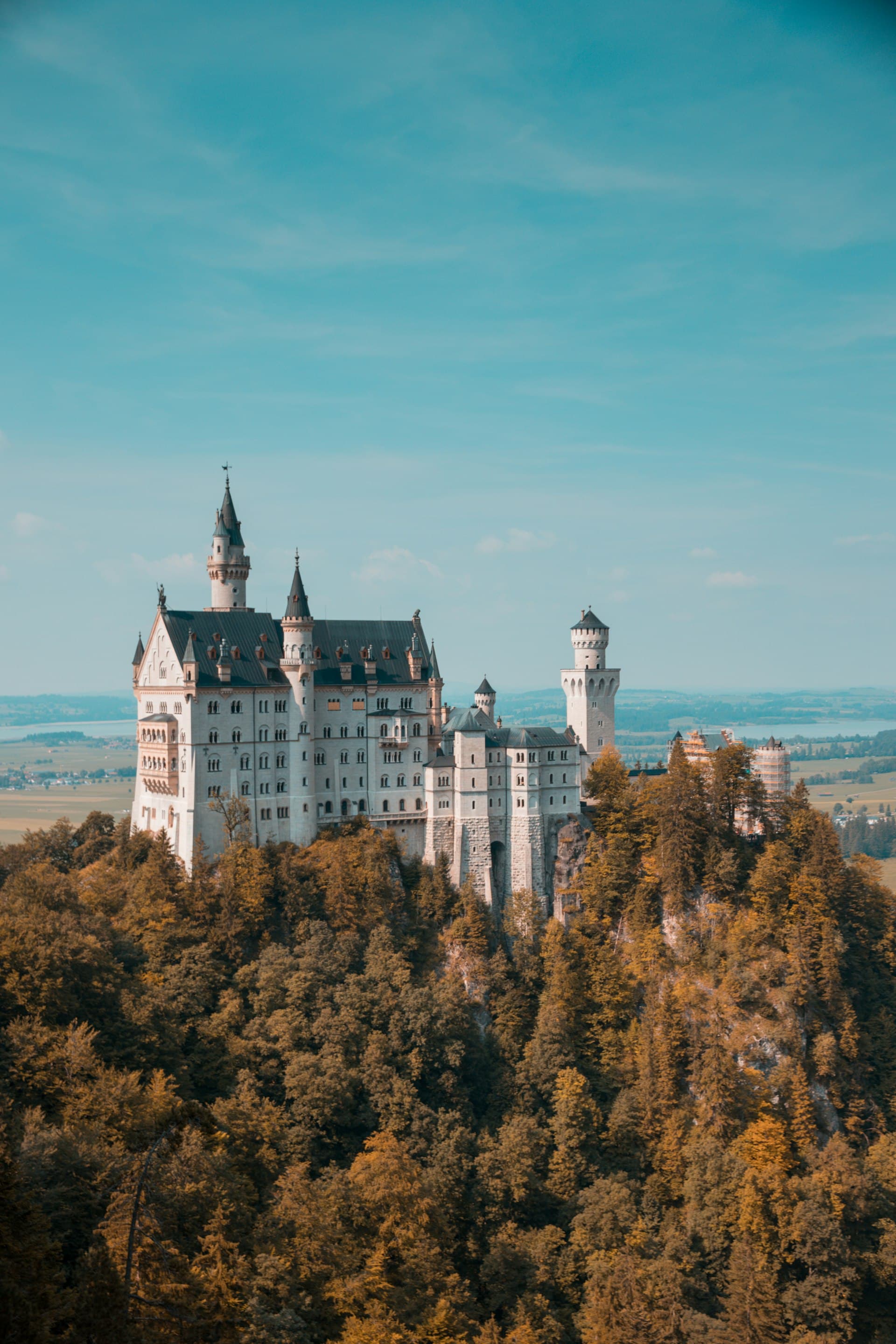
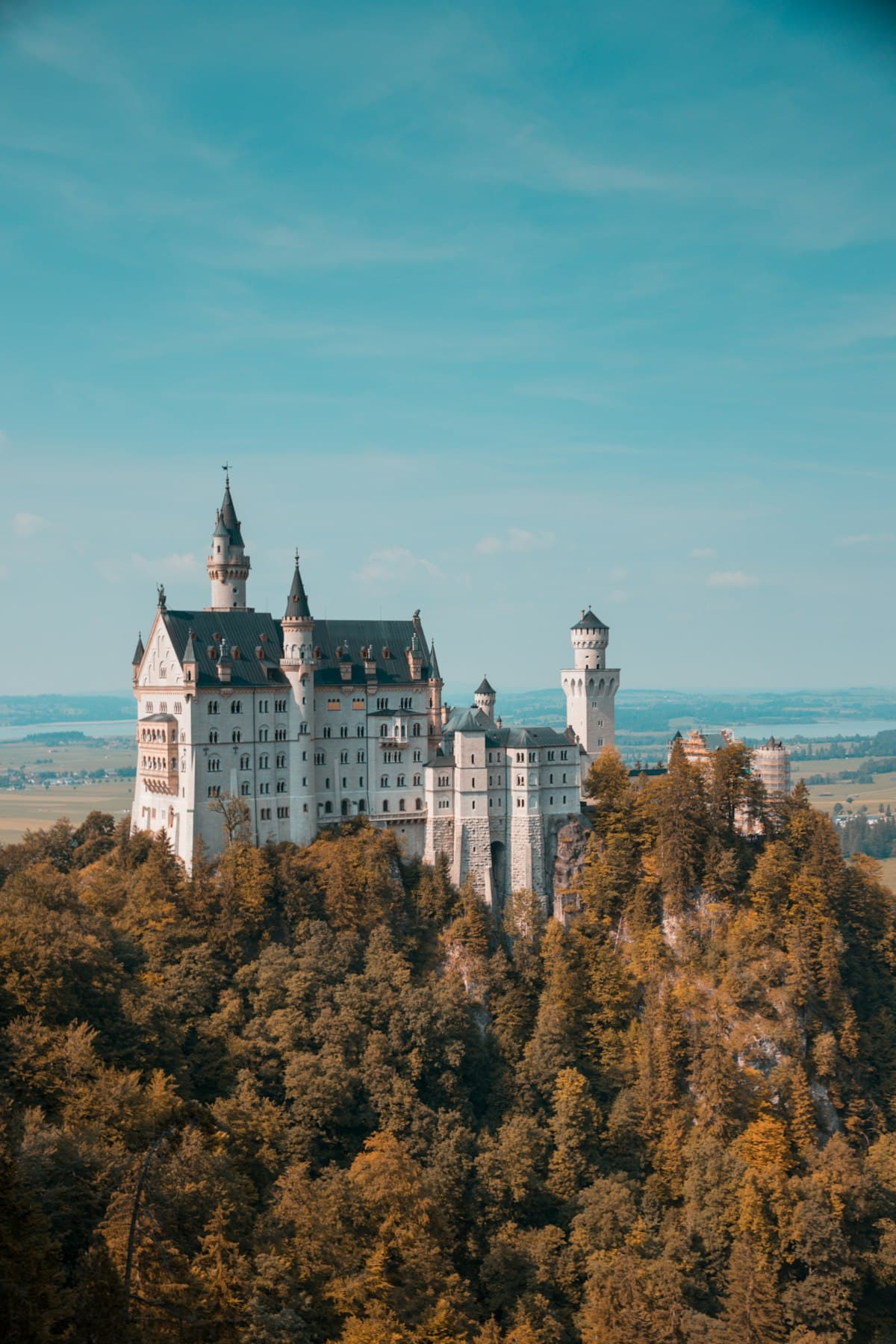
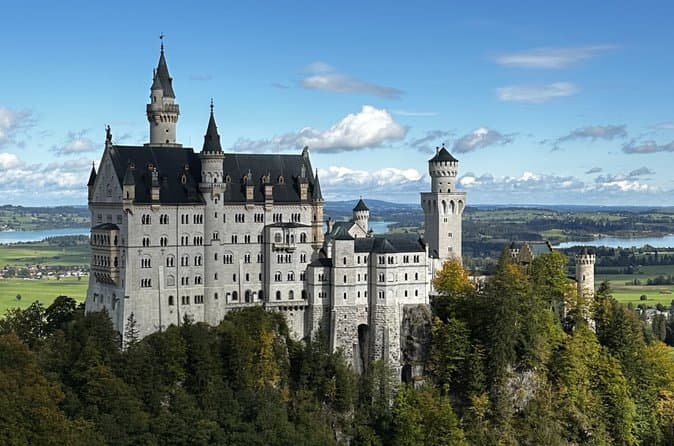
1. Neuschwanstein Castle — The Fairy-Tale Original
There is a reason Neuschwanstein became the template for the Disney castle: it is genuinely extraordinary. King Ludwig II broke ground in 1869 with the intention of building the most perfect Romanesque castle ever conceived. He died in 1886 with it unfinished. The 14 completed rooms include a Throne Room of Byzantine splendor and a Singer's Hall that appears to float above the Alpine forest below.
The castle sits at roughly 1,000 meters elevation on a rocky outcrop above the village of Hohenschwangau. The approach — either on foot up a winding path through beech forest, or by horse-drawn carriage — is itself memorable. The view from the Marienbrücke suspension bridge, positioned to frame the castle against the Alps, is one of the defining photographs of Central Europe.
UNESCO designation (July 2025) has increased demand further. Interior tours must be booked in advance. The experience is unrepeatable.
2. Linderhof Palace — Ludwig's Private Retreat
Of all the places Ludwig II built, Linderhof is the one where you most feel his presence. It is small — genuinely small, more villa than palace — tucked into a narrow Alpine valley that Ludwig loved since childhood. He spent more nights here than anywhere else. It was the only castle he lived to see completed.
The exterior is exuberant Italian Baroque, with terraced gardens climbing the hillside behind and a Neptune fountain that shoots a jet of water higher than the palace roof. The interior is the apotheosis of 19th-century decorative arts: every surface gold-leafed, inlaid, painted, or mirrored. The Hall of Mirrors creates an infinite tunnel of candlelight that is genuinely disorienting.
In the park, the Venus Grotto — an artificial cave with a painted backdrop, lake, and mechanical gondola, all lit by one of Europe's first electric lighting systems — tells you everything about how Ludwig experienced the world. He had Wagner's operas performed here, for an audience of one.
3. Herrenchiemsee — The Bavarian Versailles
Ludwig II was obsessed with Louis XIV of France. He styled himself "the Moon King" to Louis's "Sun King." And when he decided to build his tribute to the French absolutist ideal, he went to its logical extreme: a palace on an island in Bavaria's largest lake, built as a deliberate copy of Versailles — and in several respects larger than the original.
The Hall of Mirrors at Herrenchiemsee is 98 metres long, versus Versailles's 73. The Grand Staircase is grander. Ludwig's bedroom makes Louis XIV's look modest. And because Herrenchiemsee requires a ferry crossing and receives a fraction of Neuschwanstein's visitors, you can often walk its Hall of Mirrors in near-silence — a genuinely rare experience.
The island setting — Herreninsel in the Chiemsee, a lake often called the "Bavarian Sea" for its size — adds an extra dimension. The crossing on the ferry, with the palace visible ahead and the Alps rising behind, is one of the great arrival moments in Bavaria.
4. Hohenschwangau Castle — The Childhood Home
Five minutes' walk from Neuschwanstein, Hohenschwangau is where Ludwig II grew up. His father, King Maximilian II, had this medieval ruin restored in the 1830s as a summer palace, commissioning murals of the Wagnerian legends that would later consume Ludwig's imagination.
The castle is smaller and more intimate than its famous neighbor across the valley. The rooms still contain original Wittelsbach furniture and personal objects. The view from the upper floors of Neuschwanstein under construction — as Ludwig watched it from his childhood windows — gives the two castles a biographical weight that neither has alone.
Most visitors rush past Hohenschwangau to reach Neuschwanstein. That's a mistake. Visit both, in order, and the second becomes a different kind of experience.
5. Nymphenburg Palace — Munich's Royal Garden
Nymphenburg is the only castle on this list that's inside Munich itself — reachable by tram from the city center. Built in the 17th century as a summer residence for the Wittelsbach electors, it expanded over the following two centuries into a 700-meter-wide Baroque complex fronted by formal gardens and a canal.
The palace interior is lighter and more elegant than Ludwig II's creations — all white stucco, gilded mirrors, and fresco ceilings that feel less like obsession and more like confident aristocratic taste. The carriage collection, with vehicles dating to the 18th century including Ludwig II's fantastically elaborate Coronation Coach, is one of the most significant of its kind in Europe.
The park behind Nymphenburg — with its English garden, small lakeside pavilions, and formal parterres — is worth an hour of wandering before or after the palace. In spring it is one of the most beautiful public gardens in Germany.
6. Neuschwanstein's Neighbor: The Ruins of Falkenstein
Ludwig II purchased the ruins of Falkenstein Castle, a medieval fortress on a dramatic rock outcrop near the Austrian border, and spent years designing a replacement that would make Neuschwanstein look restrained. Construction never began — his funds ran out, and then he died. What remains are the ruins, the extraordinary plans, and one of the most atmospheric walks in the Bavarian Alps.
Falkenstein is not a conventional tourist site. There is no visitor center, no gift shop, no official guided tour. Getting there requires local knowledge. But the combination of crumbling medieval stonework, Alpine panorama, and the ghost of what Ludwig imagined here makes it memorable in a way that polished castle experiences sometimes cannot match.
7. Burghausen Castle — The World's Longest
Two hours from Munich, Burghausen holds a Guinness record that most visitors to Bavaria have never heard of: it is the world's longest castle complex, stretching 1,051 metres along a ridge above the Salzach River on the Austrian border. Six successive courtyards climb the hill, each with its own gate, towers, and history.
The town below the castle is one of the most beautifully preserved medieval towns in Bavaria, and almost entirely unknown to international visitors. The castle itself has been continuously inhabited since the 12th century. The combination of scale, history, and the almost total absence of crowds makes it the kind of discovery that travelers talk about for years afterward.
Why Not Do It Alone
None of these castles is impossible to reach independently. But visiting them well — seeing them in the right order, understanding what you're looking at, standing in the Singer's Hall while someone who has been inside it hundreds of times explains why Ludwig designed the acoustics the way he did — is a different experience.
The practical layer is real too. Neuschwanstein interior tickets sell out. Herrenchiemsee ferry times need coordinating with palace tour slots. Linderhof and Neuschwanstein are 40 minutes apart, but the route between them requires knowing which roads to take and when.
Our guides live in this landscape. Several of them grew up within sight of Neuschwanstein. The difference isn't luxury — it's depth. These places were built to be experienced as stories. We tell the stories.
“We thought we'd seen European palaces before. Herrenchiemsee on a foggy October morning was something else entirely — we had the Hall of Mirrors almost to ourselves.”
Jonathan & Susan, Edinburgh
“Linderhof was our favorite. It's small enough that you feel like you're inside the king's private world, not a museum.”
Anne-Marie D., Paris
“I never would have found Hohenschwangau on my own. The childhood home context made Neuschwanstein twice as meaningful.”
Michael T., Boston
Written by
European Castles Tours
A family-run tour company based 5km from Neuschwanstein Castle since 2004.
Quick Answer
What are the best castles near Munich?
The top castles near Munich are Neuschwanstein (UNESCO, 1h45), Linderhof (Ludwig II's favorite, 1h30), Herrenchiemsee (Bavarian Versailles, 1h15), Nymphenburg (in Munich itself), and Hohenschwangau (Neuschwanstein's neighbor). Most require coordinating tickets, transport, and timing — a private tour covers 2-3 in one day.
Common Questions
Frequently Asked Questions
Neuschwanstein draws the most visitors and is genuinely extraordinary, but many repeat visitors name Herrenchiemsee as the most impressive. The Hall of Mirrors is longer than Versailles, the island setting is dramatic, and the visitor numbers are a fraction of Neuschwanstein's. The honest answer is that they are impressive in completely different ways.
Yes — with a private tour. Neuschwanstein and Linderhof are a natural pairing (about 40 minutes apart). Neuschwanstein and Hohenschwangau are a five-minute walk from each other. Herrenchiemsee works well as a standalone day. On public transport, combining castles is significantly harder because each requires separate coordination.
Absolutely. Nymphenburg is the most accessible of the Wittelsbach palaces — it's within the Munich city limits, reachable by tram, and the park is one of the finest in Bavaria. The palace interior is lavish Baroque. It's an ideal half-day if your schedule is tight, or a complement to a castle-focused day tour.
Most are, with seasonal variations. Neuschwanstein and Linderhof are open year-round (with brief closures in November and around Christmas). Herrenchiemsee closes from November to March. Nymphenburg Palace is open year-round though some of the park pavilions have winter closures. We keep current operating hours and plan accordingly.
For summer visits (June-September), 4-6 weeks minimum. For shoulder seasons, 2-3 weeks is usually sufficient. The bottleneck is Neuschwanstein timed-entry tickets, which have finite availability. Our tours include pre-secured tickets — book as early as possible to guarantee your preferred date.
Neuschwanstein captures children's imagination immediately — it looks exactly like the castle in a story. Nymphenburg has a park large enough to explore for hours. Linderhof has a mechanical table that rises from the floor set for a meal (Ludwig used it to dine without seeing servants) that tends to fascinate younger visitors. All of our tours are designed to be genuinely engaging for children.
You can visit some independently. Nymphenburg and the grounds of most castles are accessible without a guide. Interior tours at Neuschwanstein, Linderhof, and Herrenchiemsee require tickets that must be booked in advance. The transport logistics — especially for combining multiple castles — are where most independent visitors run into difficulty.
Explore These Places
Related Tours
Keep Reading
More From the Blog
Best Neuschwanstein Photography Spots — A Photographer's Guide
The photographs that made Neuschwanstein famous were taken from specific places at specific times of day. Here is what each viewpoint offers — and why the best shots happen when you know where to stand.
Travel GuideIs Neuschwanstein Castle Worth Visiting? — An Honest Answer
Every year, travelers ask whether Neuschwanstein lives up to its reputation. The honest answer is: it depends entirely on how you visit. Done right, it is one of the most extraordinary days in European travel.
Seasonal GuideChristmas Markets and Castle Tours in Bavaria — A Winter Fairy Tale
Bavaria in December is a different country. Neuschwanstein in snow and Nuremberg's Christmas market in candlelight are two of the most extraordinary winter experiences in Europe — and they are an hour apart.