Travel Guide
The Complete Guide to Visiting Neuschwanstein Castle (2026)
Everything you need to plan a visit to Neuschwanstein Castle, from a team that lives 5km away and has guided thousands of visitors through Ludwig II's fairy-tale masterpiece.
4.9/5 on TripAdvisor
Money-Back Guarantee
Since 2004
No Hidden Extras
Most visitors waste 3 hours in line that a private guide eliminates in seconds — and never learn why the castle was never finished.
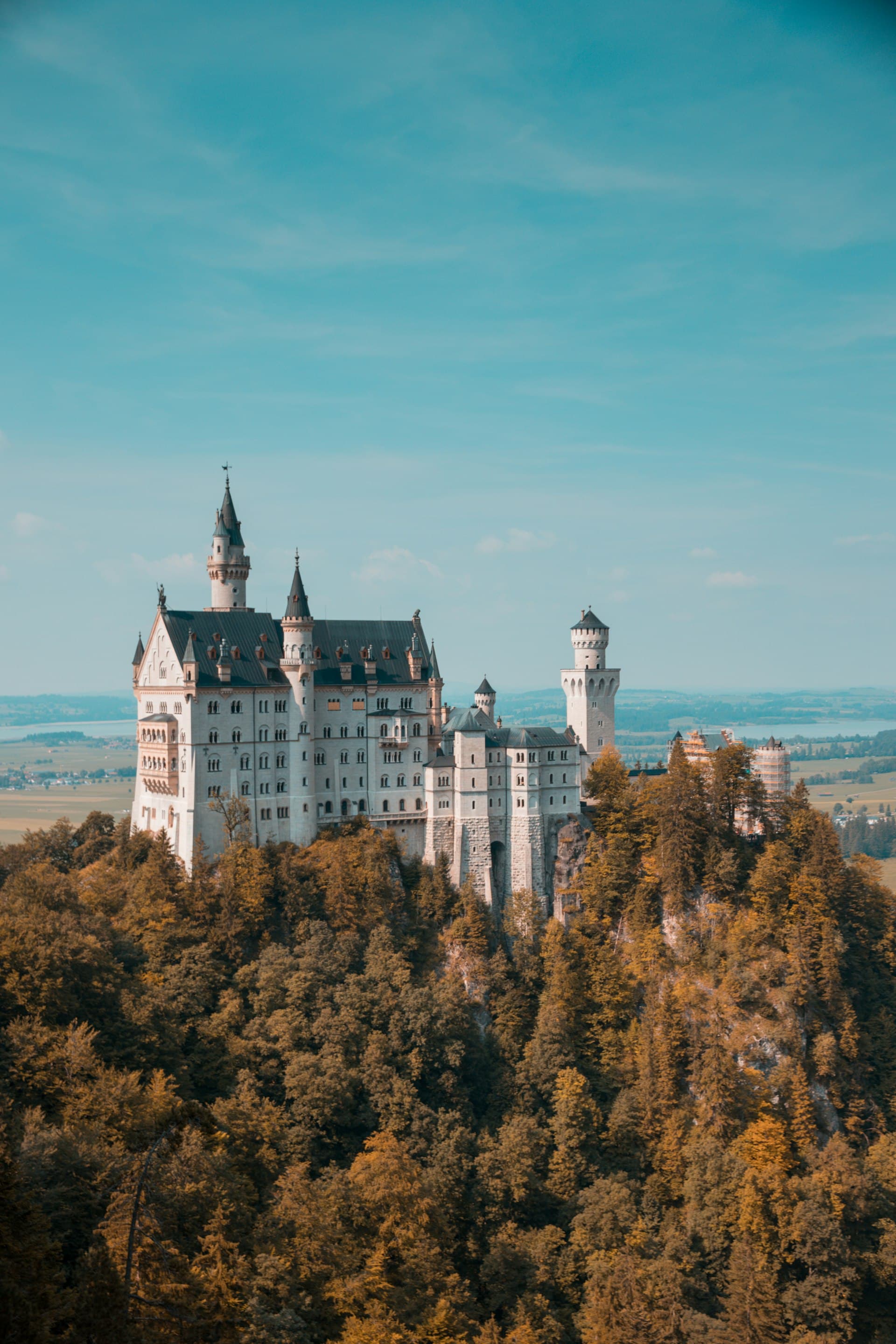
Neuschwanstein Castle sits on a rugged hilltop above the village of Hohenschwangau in the Bavarian Alps, roughly 120 kilometers southwest of Munich. King Ludwig II of Bavaria commissioned the castle in 1869 as a personal retreat — a Romanesque fantasy inspired by the operas of Richard Wagner, his favorite composer. Ludwig never intended it as a seat of government. It was his private escape from a world he increasingly wanted no part of.
Construction began in 1869 and continued until Ludwig's mysterious death in Lake Starnberg in 1886. The castle was never finished. Of the planned 200 rooms, only 14 were completed and furnished. Just seven weeks after Ludwig died, the Bavarian government opened the castle to paying visitors — partly to help recoup the enormous debts Ludwig had accumulated. Today, roughly 1.4 million people visit each year, making it one of the most visited monuments in Germany.
Our team at European Castles Tours is based in Hopfen am See, a village just 5 kilometers from Neuschwanstein. We've guided thousands of visitors through these halls over the past two decades. This guide covers everything we tell our own guests before they arrive.
Getting to Neuschwanstein Castle
Neuschwanstein sits in the Bavarian Alps, roughly 120 kilometers southwest of Munich. Getting there independently means navigating trains, bus connections, parking, and the uphill approach to the castle — all before you've even started your visit. It's manageable, but the logistics consume time and attention that could be spent on the experience itself.
Our guests let us handle the journey entirely. We collect you from your Munich hotel, arrive at the optimal time, and handle everything from parking to the approach — so your first memory of Neuschwanstein is the castle appearing through the treeline, not a parking lot queue.
If you're already based in Füssen, the castle is just 5 kilometers away, and our Füssen-based skip-the-line tours depart from there.
Getting Your Tickets
Neuschwanstein operates on timed entry — every visitor needs a specific time slot, and that slot must be secured before you arrive at the castle gate. In peak season, tickets disappear weeks in advance. Show up without one and you won't get in, regardless of how far you've traveled.
The ticket process is one of the most frequent pain points for independent visitors. The wrong date, a missed confirmation, a sold-out slot on your chosen day — any of these turns a dream trip into a frustrating afternoon in a village car park.
Our VIP Neuschwanstein tour from Munich includes pre-arranged priority admission — no ticket hunting, no time-slot stress, no standing in the gate queue. You walk directly in.
The Approach to the Castle
From the village below, there are several ways to reach the castle entrance: on foot (a 30 to 40 minute uphill walk with views of the Alpsee), by horse-drawn carriage, or by shuttle bus. Each has its own charm and its own queue in high season.
On a private tour, your guide knows which approach works best that day — whether conditions favor the walk, which option to use to reach the Marienbrucke viewpoint first, and how to sequence the visit to make the most of your time. It's the kind of decision that sounds minor until you're standing in the wrong queue with your timed slot ticking down.
What to See Inside
The interior tour covers the 14 completed rooms, and each one reflects Ludwig's obsessive attention to detail. Highlights include:
The Throne Room: Modeled after the Allerheiligen-Hofkirche in Munich, with a stunning Byzantine-inspired dome and golden mosaic floor. Ironically, the throne was never installed — the room was still under construction when Ludwig died.
The Singer's Hall: The largest room in the castle, inspired by the Wartburg in Thuringia where the famous medieval song contest took place. The walls are covered in paintings depicting the legend of Parsifal. Ludwig never hosted a single concert here during his lifetime; the first public performance didn't take place until 1933.
The King's Bedroom: Elaborate Gothic wood carvings took 14 craftsmen over 4 years to complete. The bed canopy alone required the work of several specialist carvers over many months.
The Grotto: An artificial stalactite cave connecting two living rooms, complete with a small waterfall and colored lighting. It was Ludwig's private tribute to the Horselberg grotto from Wagner's Tannhauser.
The Marienbrucke (Mary's Bridge)
This narrow iron bridge spans the Pollat Gorge at a height of about 90 meters, directly behind and above the castle. It offers the iconic postcard view of Neuschwanstein with the Alpine lakes stretching out behind it. The bridge was built in the 1840s — decades before the castle — for Ludwig's mother, Queen Marie.
The bridge is free to access and no ticket is required. In peak summer, the viewpoint can have its own queue — 15 to 30 minutes just to cross. At the right time of day, with the right approach, you can have the bridge almost to yourself; your guide will know when that window is. The bridge closes when icy conditions make it unsafe, typically from November through April depending on weather.
Nearby Attractions Worth Your Time
Hohenschwangau Castle
Directly across the valley from Neuschwanstein, this yellow castle is where Ludwig II grew up. It's less famous but arguably more interesting historically — the rooms are furnished exactly as the royal family used them. A combination ticket covers both castles, and our tours handle the booking for both so you spend your time inside the rooms, not at ticket windows.
Alpsee
This crystal-clear Alpine lake sits at the foot of both castles. After your castle visits, walk down to the lakeshore for a quiet picnic spot. The Museum of the Bavarian Kings on the lakefront covers the history of the Wittelsbach dynasty and is worth an hour.
Tegelberg Cable Car
A 10-minute drive from Hohenschwangau, the Tegelberg cable car takes you to 1,720 meters with panoramic views of the castles, lakes, and Alps. There's also a summer toboggan run at the base station that children love.
Best Time to Visit
Spring (April–May): Wildflowers bloom in the meadows around the castle, the beech forests are in fresh green leaf, and crowds are a fraction of summer levels. This is one of our favourite windows — the castle looks alive rather than overrun.
Autumn (October): The most photographed season. Beech forests turn gold and crimson, wrapping the castle in autumn colour. The light is extraordinary. This is peak beauty without peak crowds.
Winter (December–February): Snow-covered turrets against a white Alpine backdrop. The castle is heated and open year-round (except a few holiday dates). The Marienbrucke viewpoint is closed in winter, but the valley view more than compensates. The atmosphere is magical and unhurried.
Summer (June–August): Maximum daylight, everything open, wildflowers still blooming in June. Also peak crowds — up to 6,000 visitors a day in July and August. If this is your window, skip-the-line access isn't a luxury; it's the only way to protect your visit from turning into a queue.
Time Needed
For Neuschwanstein alone (walk up, interior tour, Marienbrucke, walk down): 2.5 to 3 hours.
For the full Hohenschwangau area (both castles, Alpsee, Museum of the Bavarian Kings): a full day, roughly 5 to 6 hours.
If you're visiting from Munich on a day trip, you'll spend about 2 hours each way on transport (by train or car), leaving you 4 to 5 hours on site — enough for Neuschwanstein and one additional attraction.
Our Recommendation
The most rewarding way to experience Neuschwanstein is with context. Ludwig II was not simply a dreamy castle builder — he was a politically astute king who struggled with the collision between Romantic idealism and the brutal realpolitik of Bismarck's Germany. Understanding his story transforms every room from a pretty interior into a window on a fascinating, tragic life.
Our Neuschwanstein and Linderhof day tour from Munich combines the two most important Ludwig II castles with expert narration, skip-the-line access, and door-to-door transport. For a deeper dive, our 9-day Bavarian Castles Tour visits every major Ludwig II castle — including the island palace of Herrenchiemsee — with a local guide who grew up in the shadow of these mountains.
“Astrid knew exactly when to arrive. We had the castle practically to ourselves.”
Sarah M., New York
“The private tour made all the difference. No rushing, no crowds, pure magic.”
James & Emma, London
Written by
European Castles Tours
A family-run tour company based 5km from Neuschwanstein Castle since 2004.
Quick Answer
What is the best way to visit Neuschwanstein Castle?
Book a private guided tour with skip-the-line access — tickets sell out weeks ahead in peak season and the general queue can run 90 minutes or more. The castle interior tour takes 30 to 40 minutes. Combine with Linderhof Palace for the full Ludwig II experience.
Common Questions
Frequently Asked Questions
Admission includes a guided interior tour of approximately 35 minutes. Tickets sell out weeks in advance in peak season and must be secured before you arrive — which is one reason most visitors choose a private tour that handles all admission arrangements. Children under 18 enter free.
No. The interior of Neuschwanstein can only be visited as part of a guided tour (available in German and English) or with an audio guide. Tours run every 5 minutes during peak season. The castle grounds, the path up, and the Marienbrucke viewpoint are all accessible without a ticket.
The guided interior tour takes about 35 minutes. Budget 2 to 3 hours total if you include the uphill walk from the village (30-40 minutes on foot), time at the Marienbrucke viewpoint, and browsing the courtyard. For the full area including Hohenschwangau Castle and Lake Alpsee, plan 4 to 5 hours.
Late September through mid-October gives you autumn colors framing the castle without summer crowds. April and May are also excellent — wildflowers bloom in the meadows and lines are short. Winter visits (December through February) offer stunning snow-covered views and almost no crowds, though the Marienbrucke is closed.
You cannot drive to the castle itself — you park in the village below and make your way up on foot, by horse-drawn carriage, or shuttle bus, depending on conditions. From Munich, the drive to the Hohenschwangau area takes roughly 1 hour 45 minutes. Most of our guests let us handle the driving, the parking, and the timing entirely.
Explore These Places
Related Tours
Keep Reading
More From the Blog
Best Neuschwanstein Photography Spots — A Photographer's Guide
The photographs that made Neuschwanstein famous were taken from specific places at specific times of day. Here is what each viewpoint offers — and why the best shots happen when you know where to stand.
Travel GuideIs Neuschwanstein Castle Worth Visiting? — An Honest Answer
Every year, travelers ask whether Neuschwanstein lives up to its reputation. The honest answer is: it depends entirely on how you visit. Done right, it is one of the most extraordinary days in European travel.
Seasonal GuideChristmas Markets and Castle Tours in Bavaria — A Winter Fairy Tale
Bavaria in December is a different country. Neuschwanstein in snow and Nuremberg's Christmas market in candlelight are two of the most extraordinary winter experiences in Europe — and they are an hour apart.