History & Culture
King Ludwig II Castles — The Complete UNESCO Route
In July 2025, three of Bavaria's most extraordinary buildings were inscribed on the UNESCO World Heritage List. All three were built by the same man, within a 17-year period, as expressions of a private world that the real world found incomprehensible.
4.9/5 on TripAdvisor
Money-Back Guarantee
Since 2004
No Hidden Extras
Ludwig II was declared insane for building these castles — today they're UNESCO World Heritage Sites generating billions in tourism.
The King Who Built Fairy Tales
King Ludwig II of Bavaria came to the throne in 1864 at the age of 18. He was tall, physically striking, and acutely uncomfortable with the public dimension of kingship. He preferred horses to diplomacy, Wagner's operas to state functions, and Alpine solitude to the Munich court. In another era he might have been an artist or a patron of unusual private means. In 19th-century Bavaria, he was the king.
Over the next 22 years, before his mysterious death in 1886, Ludwig poured what remained of the Bavarian royal fortune — and a great deal more — into three building projects that consumed him body and mind. He employed the finest craftsmen in Europe. He corresponded obsessively with architects and decorators, sometimes sending hundreds of letters about a single room. He visited his castles at night, by torchlight, sometimes alone, sometimes never at all.
He called them his "personal property" — private expressions of an inner world that the political reality of 19th-century Bavaria could not contain. His ministers called them evidence of madness. In July 2025, UNESCO called them World Heritage Sites.
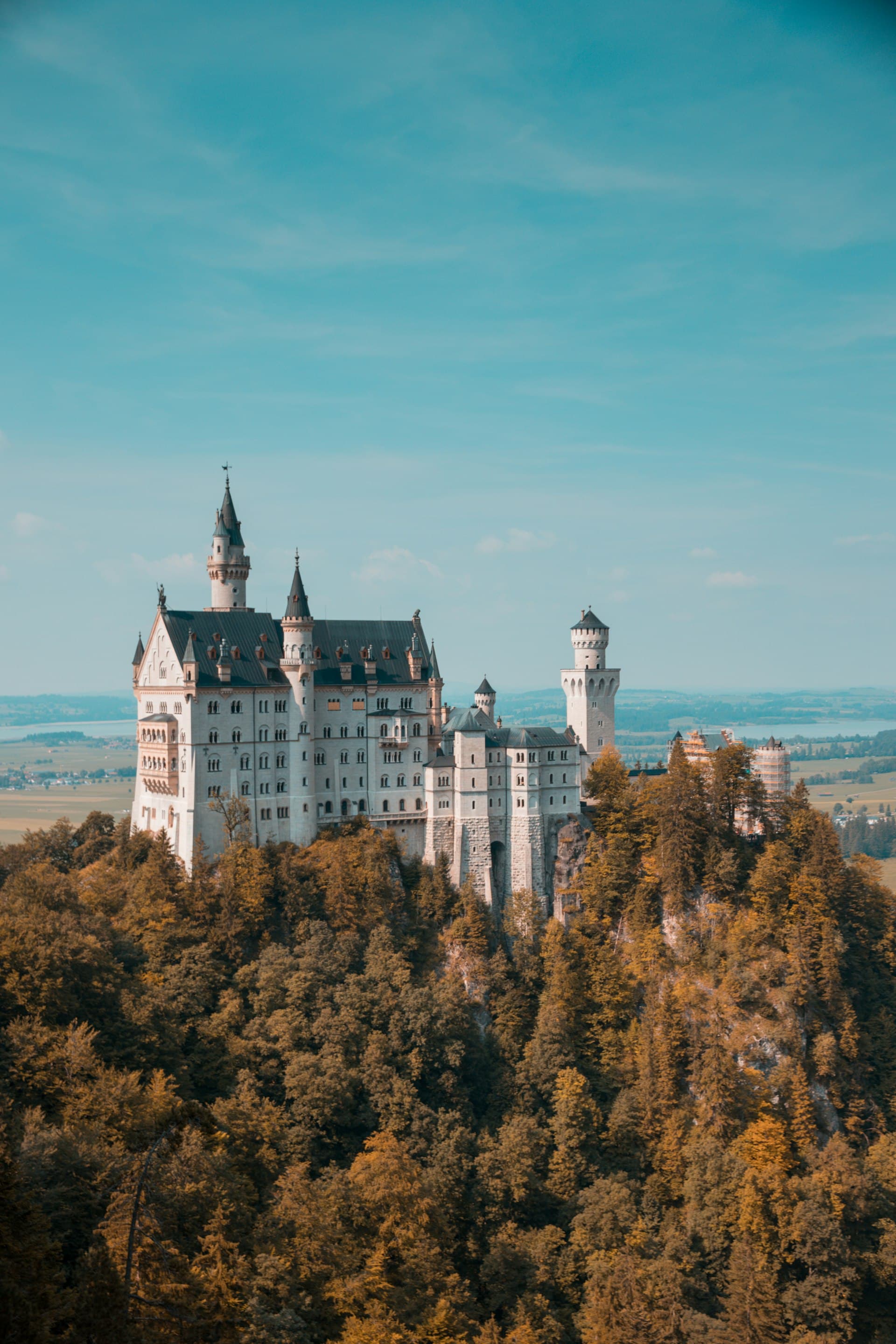
Neuschwanstein: The Myth Made Stone
Ludwig laid the foundation stone for Neuschwanstein in September 1869, on a rocky outcrop above his childhood home of Hohenschwangau. His design brief was explicit: he wanted a Romanesque castle in the spirit of the medieval legends he had loved since boyhood — the same legends that Wagner had transformed into opera. The castle was to be, in Ludwig's words, "the most authentic interpretation of a medieval knight's fortress."
What he built instead was something without precedent. The Singer's Hall on the top floor was designed for performances of Wagnerian opera — though Ludwig never hosted a performance there. The Throne Room was modeled on a Byzantine basilica, rendered in gold mosaic and lapis lazuli, with an alcove designed for a throne that was never installed. Every surface in the royal bedroom is carved oak Gothic tracery, worked by 14 craftsmen over four and a half years. And all of it was equipped with central heating, running water to every floor, and a kitchen fitted with mechanical spits and hot and cold running water — because Ludwig wanted medieval myth and modern comfort simultaneously.
He spent fewer than 200 nights here before his death. The castle he built for absolute privacy has since been visited by over 60 million people. It was designated a UNESCO World Heritage Site in 2025, recognized specifically for its extraordinary synthesis of Historicist architecture, Wagnerian mythology, and 19th-century engineering.
Linderhof: The Only Castle He Completed
Linderhof is the smallest and most personal of Ludwig's three castles. It sits in a narrow Alpine valley called the Graswangtal, surrounded by mountains on three sides, about 85km southwest of Munich. Ludwig had known this valley since childhood and returned to it throughout his life. It was the only castle he lived to see finished.
The exterior is Italian Baroque — exuberant, symmetrical, crowned with a gilded Atlas figure holding up the globe. The gardens terraced into the hillside behind are formal French design: cascades, fountains, geometric parterres, a Neptune fountain that throws water 25 meters into the air. Ludwig had the entire landscape remodeled according to his specifications, which included flattening a mountain and rerouting a stream.
Inside, every room demonstrates Ludwig's complete indifference to restraint. The Hall of Mirrors creates an infinite tunnel of reflection and candlelight. The dining room contains the famous "Table of Wishes" — a table fitted with a mechanism that allowed it to descend through the floor to the kitchen below, be laid with a meal, and rise again fully set. Ludwig used it to dine alone without seeing any servants. He frequently chose to eat as Louis XIV, or as Lohengrin, or as no one in particular — the historical record on this is deliberately unclear.
In the park, the Moorish Kiosk and the Venus Grotto — an artificial cave with a painted backdrop, a lake for a mechanical gondola, and one of Bavaria's first electric lighting systems — complete the picture of a man who built his own reality rather than accept the one offered to him.
Herrenchiemsee: The Tribute to the Sun King
Ludwig II's admiration for Louis XIV of France was not casual. He styled himself, in private correspondence, as the "Moon King" to Louis's "Sun King." He collected portraits of Louis XIV the way other people collect stamps. And when he decided to honor this admiration architecturally, he did so with characteristic ambition: he would build a more complete version of Versailles, on an island, in Bavaria.
He purchased Herreninsel — the largest island in the Chiemsee, Bavaria's largest lake — in 1873. Construction began in 1878. The central block of the palace, which Ludwig lived to see completed, contains rooms that exceed their Versailles counterparts in scale and decoration. The Hall of Mirrors is 98 metres long — 25 metres longer than Versailles's. The Grand Staircase deploys marble, gilded stucco, and painted ceilings that took hundreds of craftsmen years to complete. Ludwig's own bedroom — itself a copy of Louis XIV's state bedroom — is so densely decorated that photographs rarely capture its full impact.
Ludwig visited Herrenchiemsee only nine times before his death. The wings he planned were never built; the island is occupied primarily by the 18th-century monastery that predates the palace and is now a museum in its own right. What survives is both complete enough to be overwhelming and incomplete enough to make you understand the scale of what was planned.
The island setting transforms the experience. You arrive by ferry across a lake bordered by Alpine foothills. The palace appears through a frame of trees, white and gold against the sky. The combination of water, mountains, and architectural ambition at this scale is unlike anything else in Central Europe.
The UNESCO Designation and What It Means
In July 2025, all three Ludwig II castles were inscribed on the UNESCO World Heritage List as part of a multinational nomination covering exceptional examples of 19th-century Historicism — the architectural movement in which buildings deliberately recreated historical styles to express contemporary visions of the past.
UNESCO's criteria for the designation emphasized several things: the extraordinary quality of the craftsmanship, the castles' role in shaping global perceptions of what a "castle" looks like (Neuschwanstein's influence on Disney is the most cited example, but the broader impact on tourism, film, and architecture is equally significant), and the biographical coherence of the three buildings as the work of a single, highly unusual patron.
The practical consequence for visitors: demand has increased. Interior tours that were already popular have become more competitive. The window between "I'd like to go" and "tickets are available" has widened. Planning further in advance than visitors were accustomed to is now genuinely necessary.
Experiencing the Full Ludwig II Route
The three castles are not in the same place. Neuschwanstein and Linderhof are roughly 40 minutes apart in the Bavarian Alps southwest of Munich. Herrenchiemsee is on its lake island about 90km east of Munich. Visiting all three in a single day is possible but demanding; most visitors are better served by two days, or by focusing on one or two castles and leaving the third for a future visit.
What all three share — and what visiting them in sequence reveals most clearly — is a biographical arc. Neuschwanstein is the public myth, the most ambitious and most famous. Linderhof is the private reality, the space where Ludwig actually lived as he wished. Herrenchiemsee is the historical tribute, the homage to an ideal of kingship that Ludwig found more compelling than his own era could offer.
Together, they constitute one of the most extraordinary acts of sustained artistic patronage in 19th-century Europe. The man who commissioned them was declared unfit to rule two months before his death. The buildings he left behind have been visited by more people than any comparable royal residences on earth.
The irony would not have been lost on Ludwig. He built private worlds. The world made them public. The tourist infrastructure that now surrounds his castles — the ticket booths and souvenir shops and ferry schedules — is precisely the kind of reality he was trying to escape. The only way to experience his actual vision is to understand what he intended, room by room, and to stand in those spaces with the stories behind them.
That is what our guides are here for.
“Standing in Herrenchiemsee's Hall of Mirrors, you understand for the first time why Ludwig is considered one of history's great patrons of art, not a cautionary tale.”
Dr. Catherine W., London
“The guide's knowledge of Ludwig's psychology made every room a revelation. You stop seeing decoration and start seeing a man's inner life.”
James & Maria H., New York
“I'd studied Ludwig II in university. Seeing all three castles in sequence, with context, was one of the most moving experiences I've had in Europe.”
Professor Erik L., Stockholm
Written by
European Castles Tours
A family-run tour company based 5km from Neuschwanstein Castle since 2004.
Quick Answer
What castles did King Ludwig II build?
King Ludwig II of Bavaria built three castles: Neuschwanstein (the fairy-tale castle), Linderhof (his intimate retreat), and Herrenchiemsee (the Bavarian Versailles). All three were designated UNESCO World Heritage Sites in July 2025. Together they tell the story of a king whose 'madness' created some of Europe's most visited monuments.
Common Questions
Frequently Asked Questions
All three Ludwig II castles — Neuschwanstein, Linderhof, and Herrenchiemsee — were inscribed on the UNESCO World Heritage List in July 2025 as part of a broader designation covering outstanding examples of 19th-century Historicism in Central Europe.
UNESCO status recognizes the castles as being of exceptional universal value — cultural, historical, and architectural. For visitors, it means the castles are subject to strict conservation standards. It also means increased demand: since the 2025 inscription, advance booking for interior tours has become more important than ever.
Each castle expressed a different dimension of Ludwig's imagination. Neuschwanstein was his Wagnerian ideal — a stage-set for Germanic legend. Linderhof was his private retreat, where he could live as he wished without the obligations of kingship. Herrenchiemsee was his tribute to Louis XIV, the absolutist ideal he admired. Together they map the obsessions of a deeply unusual man.
He was officially declared mentally unfit to rule in June 1886 by a commission of doctors who never examined him in person. The declaration was widely understood, then and now, as a political maneuver by ministers who had grown impatient with his spending and withdrawal from public life. Ludwig died two days after the declaration, under circumstances that remain officially unexplained. He was 40 years old.
It is geographically demanding but possible with a private tour. Neuschwanstein and Linderhof can be combined with an early start. Herrenchiemsee, on a lake island roughly 90km from Neuschwanstein, is better as a standalone day. Our Royal Castles of Bavaria tour is specifically designed to cover the key Ludwig II sites in sequence, optimizing time at each.
They are impressive in different registers. Neuschwanstein is the most dramatic and photogenic. Linderhof is the most intimate and best preserved as Ludwig lived in it. Herrenchiemsee is the most architecturally ambitious. Most visitors who see all three rank Herrenchiemsee highest for sheer impact — the combination of island setting, Versailles-scale grandeur, and relative quiet is extraordinary.
Yes — it was one of the formative relationships of Ludwig's life. Ludwig became King of Bavaria at 18 and within weeks had located Wagner, who was then deeply in debt and facing imprisonment. Ludwig summoned him to Munich, paid his debts, and funded his work for years. The two men met in person many times. Wagner's operas — Tristan and Isolde, Tannhäuser, Lohengrin — are depicted on the walls of all three castles.
Without qualification. These are not ordinary historic buildings that reward intellectual interest. They are visually extraordinary spaces, built by someone with unlimited resources, total aesthetic conviction, and no interest whatsoever in restraint. Whether you approach them as architecture, as history, or as the biography of a deeply unusual human being, they deliver.
Explore These Places
Related Tours
Keep Reading
More From the Blog
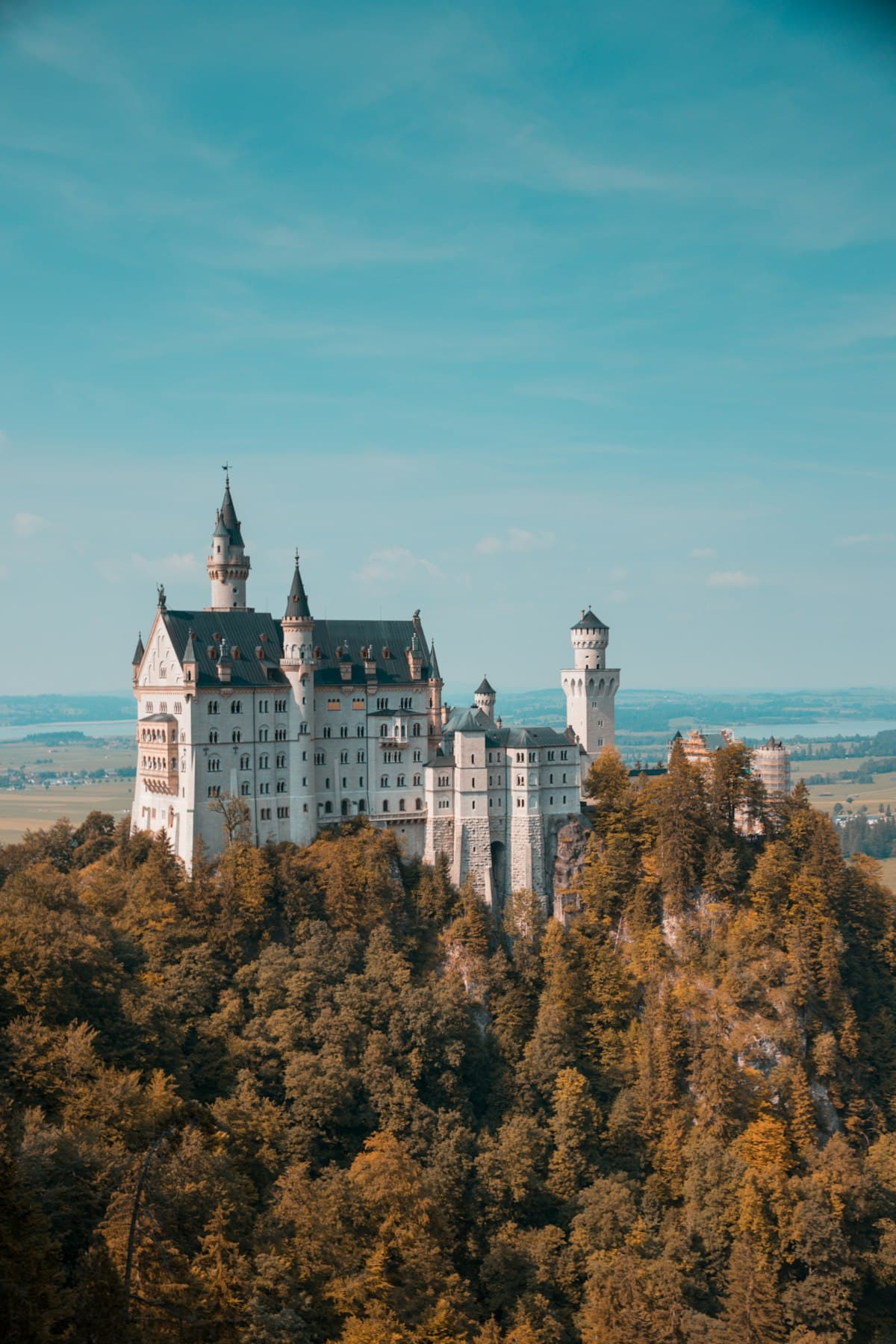
Best Neuschwanstein Photography Spots — A Photographer's Guide
The photographs that made Neuschwanstein famous were taken from specific places at specific times of day. Here is what each viewpoint offers — and why the best shots happen when you know where to stand.
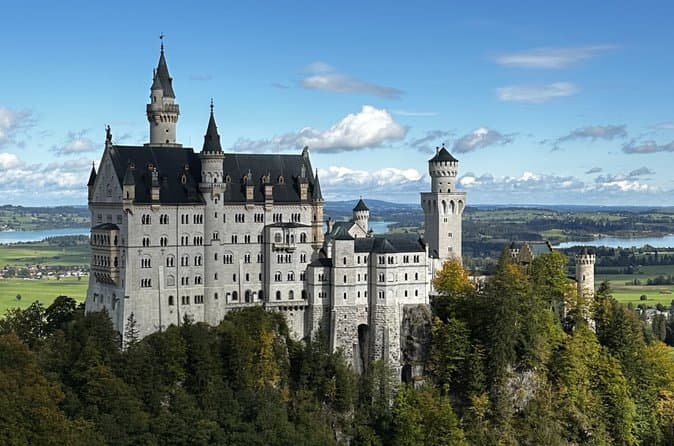
Travel GuideIs Neuschwanstein Castle Worth Visiting? — An Honest Answer
Every year, travelers ask whether Neuschwanstein lives up to its reputation. The honest answer is: it depends entirely on how you visit. Done right, it is one of the most extraordinary days in European travel.
Seasonal GuideChristmas Markets and Castle Tours in Bavaria — A Winter Fairy Tale
Bavaria in December is a different country. Neuschwanstein in snow and Nuremberg's Christmas market in candlelight are two of the most extraordinary winter experiences in Europe — and they are an hour apart.