Travel Tips
Why Neuschwanstein Feels Completely Different on a Private Tour
Neuschwanstein sees 1.4 million visitors a year. Most of them experience it from a queue. Here's what happens when you don't.
4.9/5 on TripAdvisor
Money-Back Guarantee
Since 2004
No Hidden Extras
Every ‘crowd-avoidance tip’ you find online is now public knowledge. The only thing that actually works is a guide who handles it before you arrive.
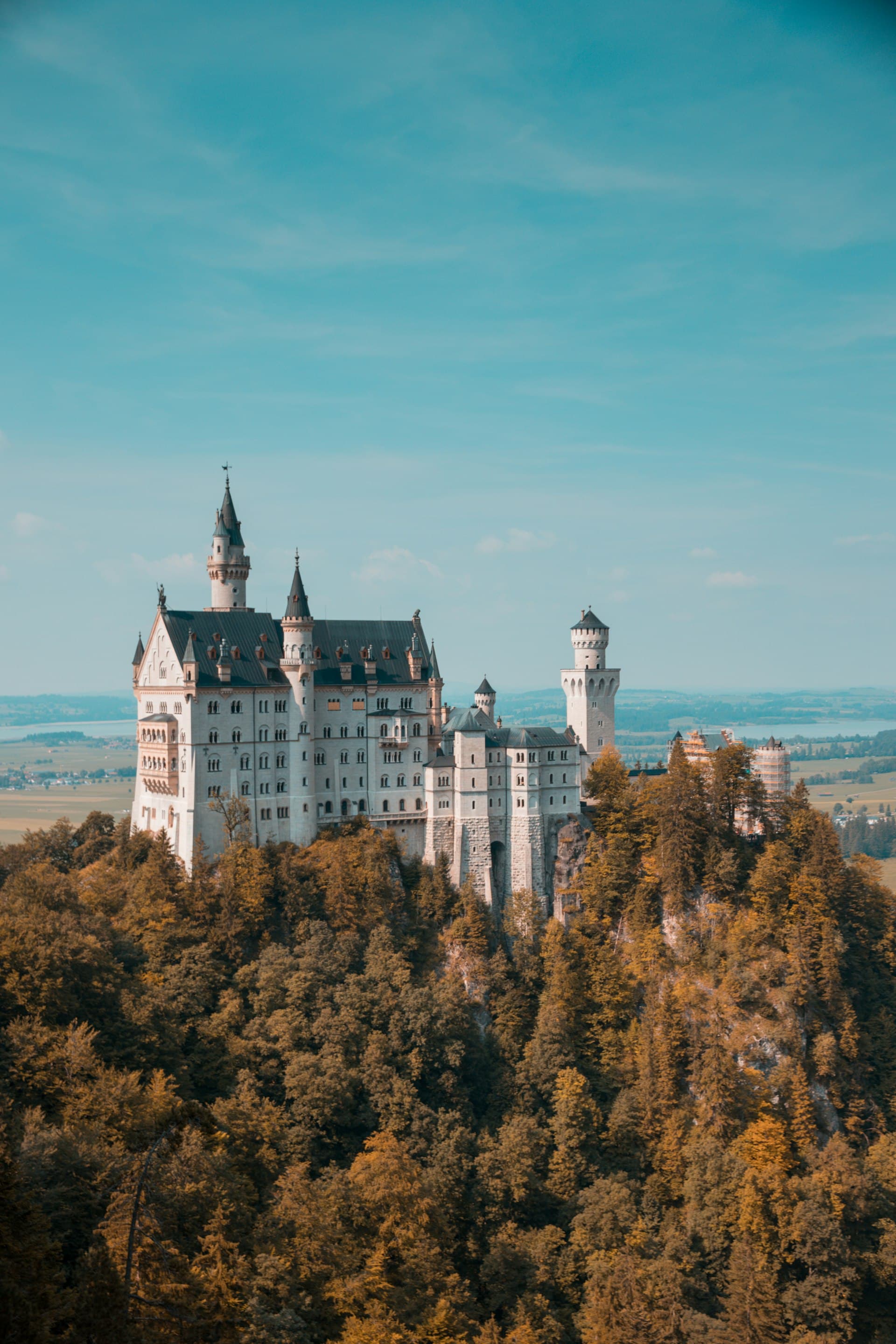
Neuschwanstein Castle receives approximately 1.4 million visitors per year. On a peak day in July or August, that's 6,000 or more people climbing the same hill, queuing at the same ticket gates, and crowding onto the same narrow Marienbrucke viewpoint. The interior tours cycle through the 14 completed rooms every few minutes. The whole thing can feel less like a royal retreat and more like an airport with a view.
We're based 5 kilometers from Neuschwanstein and have guided thousands of visitors through the castle over the past two decades. What we've learned is simple: the castle doesn't change depending on how you arrive. The experience does.
What Most Visitors Actually Experience
The typical Neuschwanstein visit from Munich goes something like this: two hours of transport each way (train, then bus connection, then the uphill path), a wait at the ticket window or gate, a 35-minute interior tour that covers 14 rooms in a group of 50 people, and then the long journey back. You've seen the rooms. You've taken the photos. But you haven't really understood what you were looking at.
Ludwig II didn't build Neuschwanstein as a showpiece — he built it as an escape from a political reality he found suffocating. He was a Romantic in the literal sense, a king who believed in the chivalric legends Wagner set to music, living in an era of Bismarck's industrial realpolitik. The castle makes complete sense once you know that. Without that context, it's beautiful but mysterious.
What Changes with a Private Guide
The 30 to 40 minutes walking uphill from the village is where the story of Neuschwanstein actually gets told. The official interior tour is too short and too crowded to cover it properly. On a private tour, this is where your guide walks you through Ludwig's life, his relationship with Wagner, his complicated relationship with the Bavarian government, and the political pressures that drove him deeper into his architectural fantasies. By the time you walk through the castle gate, you're not a tourist — you're a visitor who understands why this place exists.
Then there's the practicalities. Our VIP Neuschwanstein tour from Munich includes priority access arranged weeks in advance — you walk past the standard gate queue entirely. Door-to-door transport from your Munich hotel means no logistics stress. The timing is planned around the best conditions for the Marienbrucke viewpoint and the castle approach. Nothing is left to chance.
The Seasons — What Each One Offers
Spring (April–May): Wildflowers in the meadows, beech trees in fresh green leaf, light visitor numbers compared to summer. One of our favourite windows to visit.
Summer (June–August): Maximum daylight, everything open, the full Alpine backdrop. Also peak visitor numbers. Skip-the-line access is not optional in July and August — it's the only way to protect your day.
Autumn (October): The beech forests around Neuschwanstein turn gold and crimson. The light is extraordinary. Crowds are lighter. This is the most photographed season for good reason.
Winter (December–February): Snow-covered turrets against white Alps. The castle is open year-round (except a few holiday dates) and visitor numbers drop dramatically. The Marienbrucke viewpoint closes in winter, but the valley view more than compensates. The atmosphere is genuinely magical.
Beyond Neuschwanstein: The Wider Ludwig II World
Neuschwanstein is one of three castles Ludwig built. Understanding the full picture — why he built three, what each one represented, how his ambitions changed — requires visiting all of them. Linderhof Palace (30 minutes away in a secluded Alpine valley) is the only castle he lived to see completed, and it shows you the man behind the myth in a way Neuschwanstein's grandeur doesn't. Herrenchiemsee, on an island in Lake Chiemsee, is his most audacious project: a partial replica of Versailles that was never finished.
Our Neuschwanstein and Linderhof day tour combines the two most important Ludwig II castles in a single full day, with skip-the-line access at both. For the complete picture, our 9-day Bavarian Castles Tour covers all three — Neuschwanstein, Linderhof, and Herrenchiemsee — plus the royal palaces in Munich, from a comfortable base in the Füssen area.
The Bottom Line
Neuschwanstein is one of the most extraordinary places in Europe. It deserves the 1.4 million visitors it gets. The question isn't whether to go — it's whether you go with the context and access that makes the experience as remarkable as it should be. The castle that inspired Disney's Sleeping Beauty rewards those who arrive prepared.
“We walked straight past the queue and into the castle. I’d been dreading the lines for months.”
Rachel & Ben, Melbourne
“Astrid told us Ludwig’s story on the walk up. By the time we entered the Throne Room, we understood what we were looking at.”
Thomas K., Boston
Written by
European Castles Tours
A family-run tour company based 5km from Neuschwanstein Castle since 2004.
Quick Answer
How do you experience Neuschwanstein without the crowds?
Book a private tour with skip-the-line access — it bypasses the standard gate queue that can run 90 minutes in peak season, and adds expert historical context during the uphill approach where Ludwig II's story is best told. Spring (April–May) and October offer beautiful scenery with lighter visitor numbers. Winter visits are near-empty and magical.
Common Questions
Frequently Asked Questions
In peak summer (July and August), Neuschwanstein receives up to 6,000 visitors per day. The path up, the Marienbrucke viewpoint, and the gate queue can all be congested. With skip-the-line access through a private tour operator, you bypass the standard gate queue entirely and enter on a pre-arranged priority slot.
Buying tickets online gives you a time slot, but you still queue at the castle gate with everyone else holding the same slot window. The only way to truly bypass the queue is through a licensed tour operator with pre-arranged group access. Our guides walk guests directly past the standard line and into the castle.
Completely. The interior tour is limited to small, timed groups regardless of season, so once inside the experience is intimate and unhurried. The castle's setting — on a rocky hilltop with the Bavarian Alps behind it — is spectacular under any conditions. The key is not fighting the logistics alone.
April through May and October offer beautiful scenery with lighter visitor numbers — wildflowers in spring, autumn colour in October. Winter visits are magical under snow, with the castle often near-empty. Summer brings peak crowds but also the best daylight and all facilities open. A private tour handles the logistics in any season.
For most visitors, yes. A typical independent visit from Munich involves complex transport logistics, an hour or more in ticket and gate queues, and no narration during the castle approach — which is where Ludwig II's story is best told. A private tour eliminates all of that and brings the castle to life in a way that a rushed group visit cannot.
Explore These Places
Related Tours
Keep Reading
More From the Blog
Best Neuschwanstein Photography Spots — A Photographer's Guide
The photographs that made Neuschwanstein famous were taken from specific places at specific times of day. Here is what each viewpoint offers — and why the best shots happen when you know where to stand.
Travel GuideIs Neuschwanstein Castle Worth Visiting? — An Honest Answer
Every year, travelers ask whether Neuschwanstein lives up to its reputation. The honest answer is: it depends entirely on how you visit. Done right, it is one of the most extraordinary days in European travel.
Seasonal GuideChristmas Markets and Castle Tours in Bavaria — A Winter Fairy Tale
Bavaria in December is a different country. Neuschwanstein in snow and Nuremberg's Christmas market in candlelight are two of the most extraordinary winter experiences in Europe — and they are an hour apart.