Travel Guide
Germany's Romantic Road — Self-Drive vs. Guided Tour (Honest Comparison)
The Romantic Road is Germany's most famous scenic route — 460 kilometers from Würzburg to Füssen. But the brochures don't tell you about the traffic, the parking, or the towns that aren't worth stopping at.
4.9/5 on TripAdvisor
Money-Back Guarantee
Since 2004
No Hidden Extras
The Romantic Road isn't romantic if you're stressed behind the wheel and arguing about parking.
I've driven the Romantic Road more than 500 times — I stopped counting around 2015. The first time, as a new guide in 2004, I drove the entire 460-kilometer route in one day and arrived in Füssen exhausted, over-caffeinated, and convinced there had to be a better way. There is. Here's what 22 years of experience has taught me about Germany's most famous scenic drive.
What the Romantic Road Actually Is
Created in 1950 as a tourism marketing initiative (not, as the name suggests, a route for lovers), the Romantic Road connects a string of medieval towns, Baroque churches, and castles running north-south from Würzburg to Füssen. The "romantic" refers to the Romantic era's idealization of medieval architecture and landscapes — not candlelit dinners.
The route passes through three distinct regions: the wine country of Franconia in the north, the rolling Swabian countryside in the middle, and the dramatic Alpine foothills in the south. Each has its character, and honestly, the quality varies enormously.
Self-Drive: The Honest Truth
The good: Total flexibility. You set the pace, stop where you want, skip what doesn't interest you. The signposting is excellent — brown "Romantische Straße" signs mark every turn. Rental cars are readily available from Munich for day or multi-day hire.
The bad: The route follows mostly regular highways, not scenic mountain roads. Long stretches between the highlight towns are flat agricultural land — not ugly, but not what the brochures show. Parking in medieval towns is a genuine challenge. Rothenburg's lots fill up by 10 AM in summer. Navigation stress adds up when you're also trying to enjoy the scenery.
The ugly: If you're driving, you can't drink the Franconian wine in Würzburg or the Bavarian beer in Rothenburg. On a route designed around atmospheric medieval towns and local gastronomy, being the designated driver is a genuine sacrifice.
Guided Tour: What You Actually Get
A private guided tour means someone who has done this route hundreds of times handles the logistics. You don't park, you don't navigate, and you stop at the places that actually reward a visit rather than every signed village along the way.
More importantly, a guide provides context. Rothenburg ob der Tauber is beautiful to photograph, but understanding why it looks the way it does — that it was too poor after the Thirty Years' War to modernize, essentially preserved by economic decline — transforms it from "pretty" to "fascinating."
The Stops That Matter
Rothenburg ob der Tauber (essential): The star of the route. A perfectly preserved medieval walled town with half-timbered houses, cobblestone lanes, and city walls you can walk on. Yes, it's touristy. It's touristy because it deserves to be. Visit the Kriminalmuseum (medieval crime and punishment) and walk the walls in the early morning. Käthe Wohlfahrt's year-round Christmas shop is either magical or overwhelming, depending on your tolerance for ornaments.
Dinkelsbühl (highly recommended): Everything Rothenburg is, but with a tenth of the visitors. The town wall is complete, the Münster St. Georg is a masterpiece of late Gothic architecture, and you can walk the entire old town in 30 minutes without bumping into a tour group. This is my personal favorite stop on the route.
Nördlingen (worth a stop): A walled town built inside a 14-million-year-old meteor crater. You can climb the church tower (Daniel) for a view that reveals the perfect circular shape of the crater. The walls incorporate the impact rock (suevite) — you're walking on space debris.
Würzburg (if starting from the north): The Prince-Bishop's Residenz is a UNESCO site with the largest ceiling fresco in the world (by Tiepolo). The old town bridge over the Main River is perfect for an evening glass of Franconian wine.
The Stops You Can Skip
I'll get letters for this, but: Augsburg (it's a modern city that happens to be on the route — the Fuggerei is interesting but doesn't need the Romantic Road framing), Landsberg am Lech (pleasant but not essential), and most of the tiny villages between the major towns. They have charming churches, but after the third one, diminishing returns set in.
My Recommendation
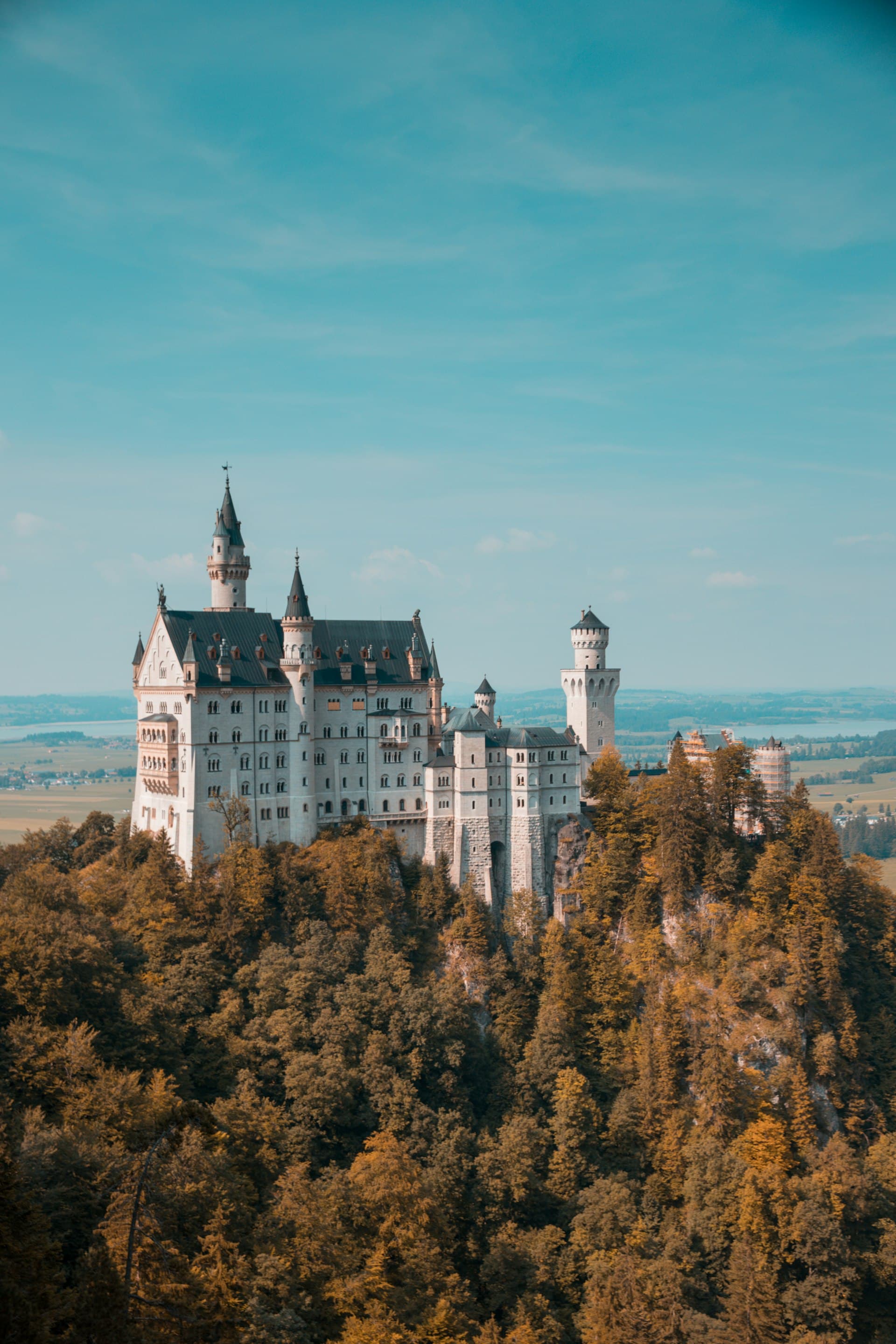
Don't try to do the whole route. Pick the strongest section — Rothenburg to Füssen — and do it properly. That's about 250 kilometers and can be done in a long day or a comfortable two days. You get the three best medieval towns (Rothenburg, Dinkelsbühl, Nördlingen), the Alpine approach, and the grand finale at Neuschwanstein Castle.
If you only have one day, our Romantic Road Highlights tour from Munich covers Rothenburg and the best of the route without the filler. You'll see more of what matters and less of what doesn't — and you can actually taste the local wine and beer.
The Bottom Line
The Romantic Road is marketing genius — a curated route through some of Germany's most photogenic towns, with a fairy-tale castle as the finale. But it's also 460 kilometers of mixed quality. The highlights are genuinely world-class; the filler is forgettable. Whether you drive yourself or go with a guide, the key is the same: be selective, go early, and don't try to do everything in one day.
“We were going to rent a car. After reading Alessandro's advice, we booked the guided day trip instead. Best decision of the trip.”
Rachel & Tom, Boston
“Our guide knew which gate to enter Rothenburg through for the best first impression. Details like that you can't get from a guidebook.”
Hiroshi M., Osaka
Written by
European Castles Tours
A family-run tour company based 5km from Neuschwanstein Castle since 2004.
Quick Answer
What is Germany's Romantic Road?
The Romantic Road (Romantische Straße) is Germany's most popular scenic route, stretching 460 km from Würzburg in Franconia to Füssen in the Bavarian Alps. It passes through medieval walled towns (Rothenburg ob der Tauber, Dinkelsbühl, Nördlingen), Baroque churches, and ends at Neuschwanstein Castle. The route can be driven in 2-3 days or the highlights can be seen on a guided day trip from Munich.
Common Questions
Frequently Asked Questions
The full route from Würzburg to Füssen is about 460 km and takes 5-6 hours of pure driving time. With stops, budget 2-3 days minimum. Most visitors don't drive the whole route — they pick the best section (Rothenburg to Neuschwanstein) which takes one full day.
The essential three: Rothenburg ob der Tauber (the iconic medieval walled town), Dinkelsbühl (similar to Rothenburg but far less crowded), and Neuschwanstein Castle at the route's southern end. Nördlingen is worth a stop if you like the quirk of a town built inside a meteor crater.
Both. Some sections (Rothenburg, Dinkelsbühl, the finale at Neuschwanstein) are genuinely spectacular. Other sections are unremarkable farmland between small towns. The key is knowing which stops to make and which to skip — a local guide saves you the disappointment of stopping at every signed village.
You can cover the highlights — Rothenburg and one or two other stops — in a full day from Munich (about 3 hours each way). You won't see the whole route, but the best parts absolutely fit into a day. Our Romantic Road day tour covers Rothenburg, Dinkelsbühl, and the scenic drive through the Franconian countryside.
Explore These Places
Related Tours

Keep Reading
More From the Blog
Best Neuschwanstein Photography Spots — A Photographer's Guide
The photographs that made Neuschwanstein famous were taken from specific places at specific times of day. Here is what each viewpoint offers — and why the best shots happen when you know where to stand.
Travel GuideIs Neuschwanstein Castle Worth Visiting? — An Honest Answer
Every year, travelers ask whether Neuschwanstein lives up to its reputation. The honest answer is: it depends entirely on how you visit. Done right, it is one of the most extraordinary days in European travel.
Seasonal GuideChristmas Markets and Castle Tours in Bavaria — A Winter Fairy Tale
Bavaria in December is a different country. Neuschwanstein in snow and Nuremberg's Christmas market in candlelight are two of the most extraordinary winter experiences in Europe — and they are an hour apart.